Average Age Of A First Time Home Buyer Jumps To 44!
by Brandon White

Why Waiting to Buy a Home Could Be Costing You Hundreds of Thousands
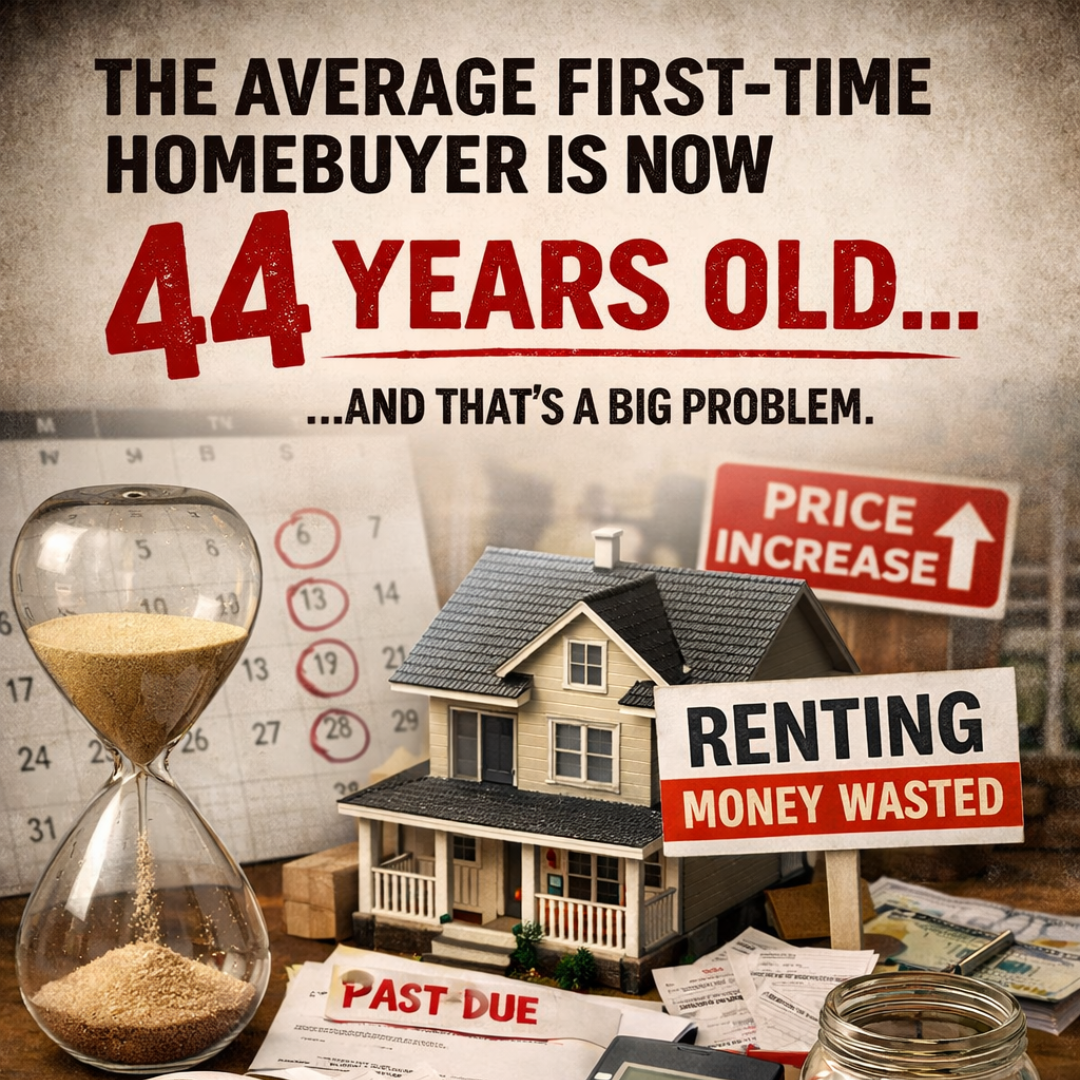
The average age of a first-time homebuyer is now 44 years old.
Let that sink in for a moment.
For decades, buying a home in your 20s or early 30s was considered a normal financial milestone. Today, that timeline has shifted dramatically—and not in a good way. More and more people are delaying homeownership, and while it may feel like the “safe” move, it’s often one of the most expensive decisions they’ll ever make.
The Hidden Cost of Waiting
At first glance, waiting to buy a home can seem responsible. Maybe you’re trying to save more, waiting for rates to drop, or hoping prices come down.
But here’s the reality: waiting has a cost—and it’s massive.
When you delay buying, you delay:
- Building equity
- Locking in your monthly housing cost
- Benefiting from long-term appreciation
- Taking advantage of tax benefits
Instead, you’re continuing to rent—where 100% of your payment goes toward your landlord’s investment, not your own.
Time in the Market Beats Timing the Market
A common mistake people make is trying to “time the market.”
They wait for the perfect moment:
- The lowest interest rates
- The lowest home prices
- The perfect financial situation
But that perfect moment rarely comes.
What actually builds wealth in real estate is time in the market, not timing the market.
The earlier you buy, the more time your home has to appreciate, and the more equity you build simply by making your monthly payments.
The Compounding Effect of Homeownership
Think about this:
Someone who buys a home at 25 has nearly 20 extra years of:
- Appreciation
- Equity buildup
- Leverage
Compared to someone who waits until 44.
That difference can easily amount to hundreds of thousands of dollars—or more over a lifetime.
Real estate isn’t just about having a place to live. It’s one of the most powerful tools for long-term wealth creation available to everyday people.
Renting Keeps You Stuck
Renting has its place, especially short term. But long term, it can quietly hold people back financially.
Rents tend to rise over time, while a fixed-rate mortgage stays relatively stable. That means:
- Your housing costs become more predictable
- A portion of every payment builds equity
- You benefit from increasing property values
Meanwhile, renters often face rising costs with no return.
You Don’t Need Perfect—You Need a Plan
One of the biggest misconceptions is that you need everything to be “perfect” before buying:
- Perfect credit
- A massive down payment
- The perfect home
That mindset is keeping people on the sidelines far too long.
The truth is, you don’t need perfection—you need a strategy.
There are loan programs, down payment assistance options, and creative approaches that can help you get started sooner than you think.
The Bottom Line
Waiting to buy a home might feel like the safer choice, but in many cases, it’s the more expensive one.
Every year you wait is a year you’re not:
- Building equity
- Benefiting from appreciation
- Moving closer to financial freedom
The earlier you start, the more powerful the long-term impact.
Thinking about buying but not sure where to start?
The best first step isn’t buying a house—it’s building a plan.
Reach out and let’s map out what makes the most sense for you.