St. Louis Moves to Address 500 Vacant Properties
St. Louis Moves to Address 500 Vacant Properties — What It Could Mean for the Local Real Estate Market
The City of St. Louis is taking a significant step toward addressing one of the city's long-standing real estate challenges: vacant and neglected properties.
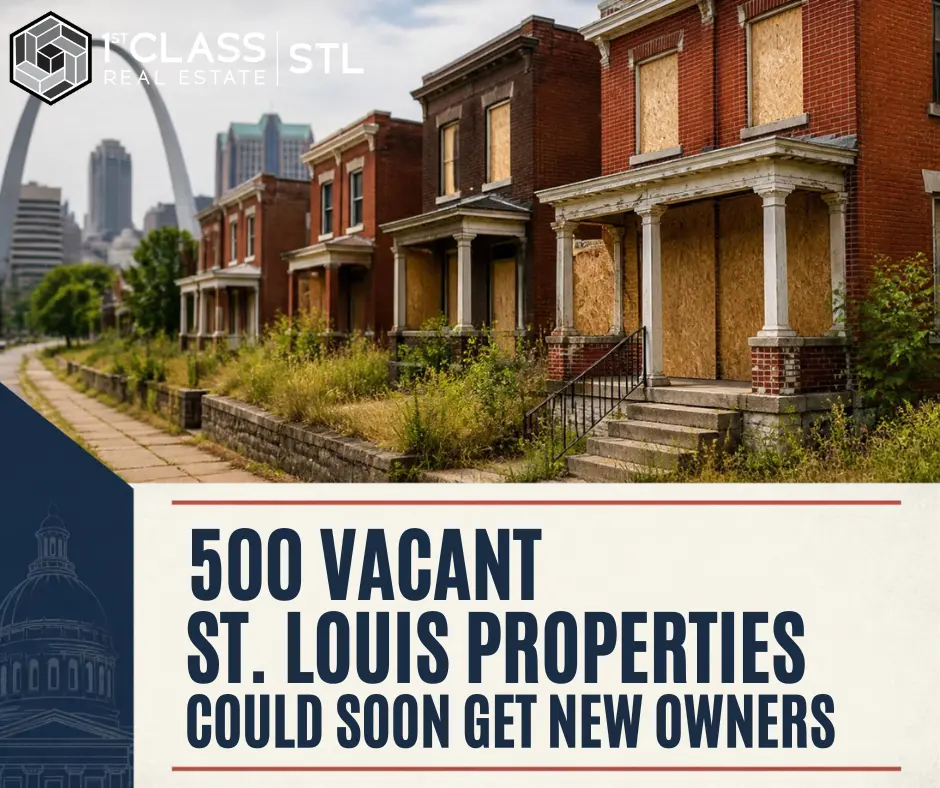
According to recent reports, St. Louis is preparing to pursue foreclosure and special tax sale proceedings involving approximately 500 vacant, neglected, and tax-delinquent properties.
While 500 properties may only represent a portion of the vacant housing throughout the city, this effort could become much bigger. City officials have indicated that the program could serve as a model for addressing additional vacant properties in the future.
For St. Louis real estate, that's something worth paying attention to.
St. Louis Doesn't Necessarily Have a Shortage of Houses
We hear a lot about housing inventory and the shortage of available homes.
But St. Louis has an interesting problem.
In certain neighborhoods, we don't necessarily have a shortage of houses.
We have a shortage of livable houses.
Vacant properties can sit for years while deteriorating. Roofs fail. Plumbing and electrical systems become outdated or damaged. Properties are vandalized. Yards become overgrown.
Eventually, a house that may have needed a relatively manageable renovation can turn into a major rehabilitation project—or even a teardown.
Meanwhile, buyers looking for affordable homes have fewer properties available to them.
Getting some of these houses back into productive use could help change that.
What Happens to These Properties?
The city's effort is designed to address properties that have been sitting vacant while accumulating delinquent taxes and other problems.
Through foreclosure and tax-sale processes, some of these properties could eventually end up in the hands of new owners willing to renovate, maintain, or redevelop them.
That could include:
-
Investors purchasing and renovating distressed homes
-
Owner-occupants willing to take on rehabilitation projects
-
Developers assembling properties for larger projects
-
Affordable housing organizations
-
Neighborhood redevelopment initiatives
Of course, not every vacant property can simply be renovated and put back on the market. Some properties may require substantial work, while others may no longer be economically feasible to save.
But even returning a portion of these properties to productive use could have an impact.
This Could Create Opportunities for Real Estate Investors
For investors, this is a development worth following closely.
Distressed and tax-delinquent properties can sometimes create opportunities to acquire real estate below the price of traditional move-in-ready homes.
But inexpensive doesn't always mean profitable.
Anyone considering one of these properties needs to carefully evaluate the entire project.
Purchase price is only the beginning.
Investors need to consider renovation costs, liens, title issues, permitting, utilities, neighborhood property values, resale potential, rental income and the overall condition of the property.
A $30,000 house that needs $150,000 worth of work isn't necessarily a better investment than a $120,000 property needing $30,000 in repairs.
Understanding the numbers is critical.
It Could Also Help St. Louis Neighborhoods
The potential impact goes beyond investors.
Vacant and abandoned properties can affect the surrounding neighborhood.
A deteriorating property can hurt nearby property values, create safety concerns and discourage additional investment on the block.
The opposite can happen when those properties are renovated.
One renovated house can lead to another.
New homeowners move in. Investors improve neighboring properties. Landscaping gets cleaned up. Additional money begins flowing into the neighborhood.
Over time, bringing vacant properties back into productive use can help stabilize entire blocks.
Could This Eventually Add Housing Inventory?
Potentially.
One of the biggest challenges facing buyers over the last several years has been limited inventory.
Thousands of existing structures throughout St. Louis aren't currently functioning as usable housing.
If programs like this can move properties from vacancy to renovation and eventually back into the housing supply, they could create additional options for buyers without requiring every home to be new construction.
It won't solve the inventory problem overnight.
But it's another way of increasing the number of usable homes available throughout the region.
This Is Just the Beginning
Perhaps the most interesting part of the city's effort isn't the first 500 properties.
It's what happens afterward.
If the process proves successful, St. Louis could potentially expand the effort to address additional vacant and neglected properties.
That could create opportunities for buyers, investors, contractors, developers and real estate professionals while helping neighborhoods deal with properties that have been deteriorating for years.
At 1st Class Real Estate STL, we'll continue following this story as more information becomes available about the properties involved, the foreclosure process and potential opportunities for buyers and investors.
If you're considering buying, selling or investing in real estate anywhere throughout the St. Louis metro area, having the right information and strategy matters.
1st Class Real Estate STL
Increasing The Success Rate Of The Real Estate Agent
Categories
Recent Posts